Search engines aren’t the only way people discover businesses anymore. Here’s how to make your website easier for artificial intelligence to find, understand, reference, and recommend.
For years, businesses have focused on one primary objective when building their websites: getting found on Google.
You researched keywords, optimized page titles, wrote blog articles, built backlinks, and worked to move your website higher in search results.
Those things still matter.
But the way people discover information is changing.
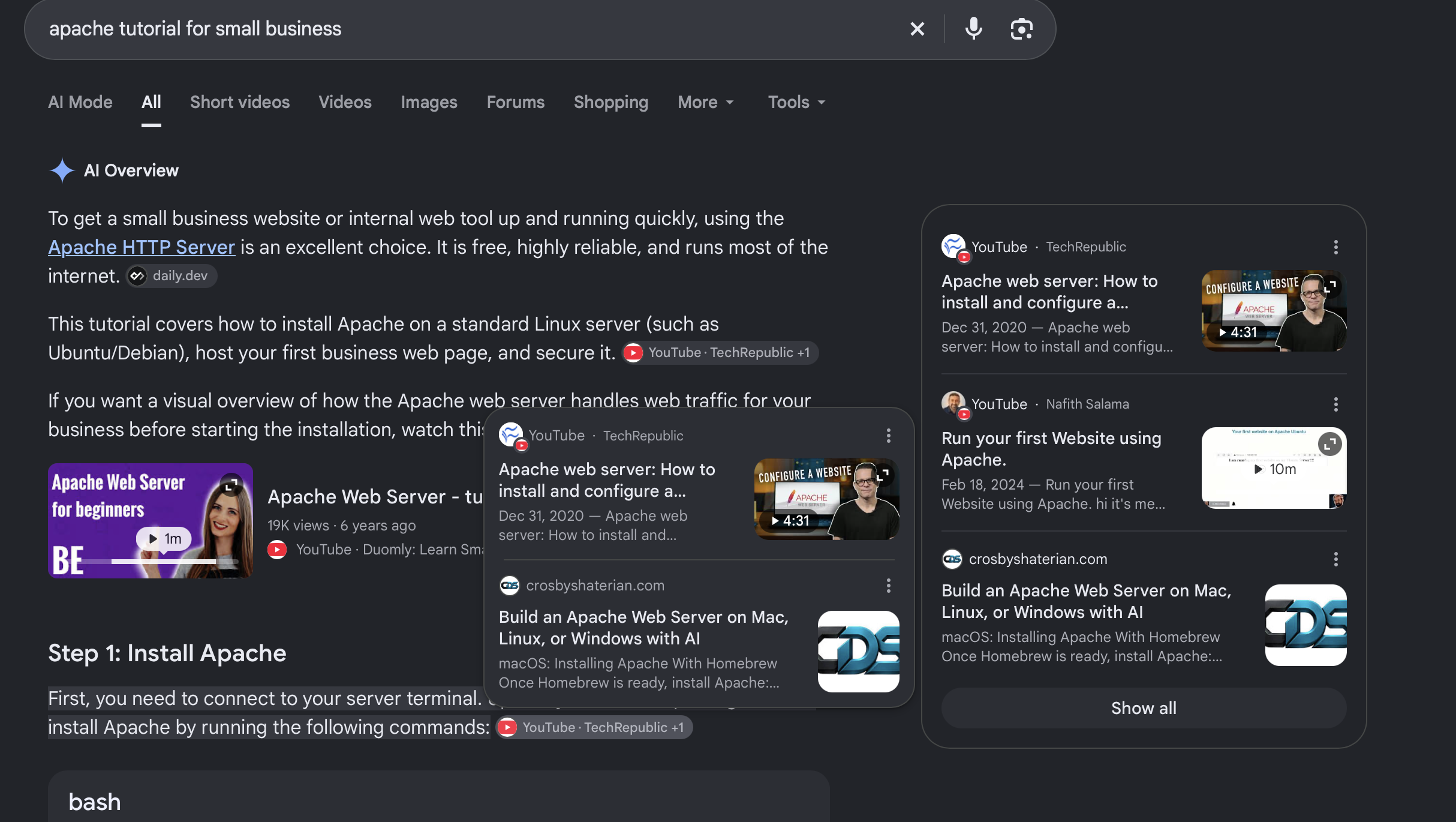
Instead of opening Google and clicking through ten different websites, people are increasingly asking artificial intelligence tools to research products, compare services, explain complicated subjects, and recommend businesses.
They’re asking ChatGPT. They’re using Google’s AI search features. They’re turning to Microsoft Copilot, Gemini, and Perplexity.
And here’s the question every business owner should be asking:
When someone asks an AI system about the services you provide, will your website be one of the sources it finds?
If your website isn’t accessible, understandable, and relevant to the questions people are asking, you could be missing an entirely new channel of potential customers.
The good news is that there are practical steps you can take to improve your website’s visibility across these emerging platforms.
Let’s look at how it works.
1. Understand How AI Systems Find Website Content
First, it’s important to understand that AI systems don’t all discover information in exactly the same way.
Some AI experiences use information learned during model training. Others retrieve information from the internet when someone asks a question.
For example, ChatGPT Search can retrieve relevant web content and provide links to sources. Google’s AI Overviews and AI Mode use Google’s search infrastructure to identify relevant information. Microsoft Copilot can also use Bing’s search index to ground its responses.
This means your website needs to be discoverable through the systems these platforms use.
Think of it this way:
Your website might contain exactly the information someone needs, but if a search engine cannot crawl the page, the page isn’t indexed, or the content is difficult to understand, the likelihood of that content being surfaced can decrease.
There are three important stages:
Discovery: Can the system find your website and its individual pages?
Understanding: Can it determine what your content is about and whether it answers the user’s question?
Trust and relevance: Does your content provide enough useful, credible information to be considered a relevant source?
You need to address all three.
2. Make Sure AI Crawlers Can Access Your Website
One of the first things I’d recommend is reviewing your website’s technical accessibility.
Websites can restrict automated crawlers through a file called robots.txt.
This file tells search engine crawlers and other automated systems which areas of a website they are allowed to access.
If you’ve configured your website to block certain crawlers, you could unintentionally prevent some AI search systems from accessing your content.
For example, OpenAI operates a crawler called OAI-SearchBot, which is used to discover content for ChatGPT Search.
If you want your website to be eligible for inclusion in ChatGPT Search results, you should make sure this crawler isn’t blocked.
A basic robots.txt configuration allowing access could look like this:
User-agent: OAI-SearchBot
Allow: /

User-agent: Googlebot
Allow: /

User-agent: Bingbot
Allow: /

Sitemap: https://yourwebsite.com/sitemap.xml
Replace the example domain with your actual website address.
There is another important distinction here.
OpenAI also operates GPTBot, which is associated with crawling content for potential use in training its foundation models. OAI-SearchBot and GPTBot serve different purposes and can be controlled independently.
Allowing one does not automatically require allowing the other.
Also, don’t forget that your hosting provider, CDN, firewall, or security plugins can block automated traffic even when your robots.txt file allows it.
A properly configured website should make its intended public content accessible to legitimate search crawlers without exposing private or restricted areas.
3. Write Content That Answers Actual Questions
This is probably one of the biggest opportunities for businesses.
Traditional SEO often focuses heavily on keywords.
For example, a website development company might optimize a page around phrases like:
- Website development
- Web design services
- Custom website development
- Business website design
Those keywords are still valuable.
But AI systems are frequently being asked much more specific questions.
Someone might ask:
- How much does it cost to build a custom business website?
- What should I look for when hiring a website developer?
- Should my business use WordPress or a custom-built website?
- How can I automate customer inquiries on my website?
- What is the difference between traditional automation and AI automation?
Think about the questions your potential customers are actually asking.
Then create content that directly answers them.
For example, instead of publishing a short page that simply says you offer AI automation services, explain:
- What AI automation actually is.
- Which business problems it can solve.
- What types of processes can be automated.
- How implementation works.
- What businesses should consider before getting started.
- What makes one solution more appropriate than another.
Give people useful information.
A good article should be able to stand on its own without requiring someone to visit five other pages to understand the subject.
The more clearly you communicate your expertise, the easier it becomes for both people and search systems to understand what your business actually does.
4. Structure Your Website So AI Can Understand It
How you organize your website matters.
A page filled with large blocks of marketing language, vague headlines, and disconnected information can make it difficult for visitors to quickly understand what you’re offering.
The same problem can affect how automated systems interpret your content.
Use clear headings, descriptive page titles, short paragraphs, and logical content organization.
For example:
Less effective:
“Transforming Your Business Through Innovative Digital Possibilities”
More effective:
“How AI Automation Can Reduce Repetitive Work in Your Business”
The second headline communicates exactly what the page is about.
A well-structured article might look like this:
- H1: How AI Automation Can Help Small Businesses
- H2: What Is AI Automation?
- H2: Which Business Processes Can Be Automated?
- H2: How Much Does AI Automation Cost?
- H2: What Should Businesses Consider Before Implementing AI?
- H2: How to Get Started
This gives readers a clear path through the information.
It also helps search systems identify the main subject and the supporting topics.
You should also use descriptive links between related pages, meaningful image descriptions, and accessible HTML wherever possible.
Your most important content should be available as actual readable page text, rather than existing exclusively inside images, videos, or inaccessible interactive elements.
5. Use Structured Data to Explain Your Business
Here’s something many businesses overlook.
Your website doesn’t just need to communicate information to visitors. It can also provide structured information that helps search engines understand the entities, services, and content represented on your pages.
This is where Schema.org structured data comes into play.
Structured data uses standardized markup to describe information on a website.
For example, a business website might use:
Organization Schema
Identifies the business, its name, website, logo, and other relevant information.
LocalBusiness Schema
Provides details about a business with a physical location or local presence.
Person Schema
Identifies authors and helps establish who is responsible for published content.
Article Schema
Describes blog articles, including their headline, author, publication date, and other relevant information.
Service Schema
Can describe the services a business provides.
For example, a consulting company offering AI integration, automation, and website development should make those services clearly identifiable throughout its website.
Structured data should accurately reflect information visitors can actually see on the page.
It isn’t a shortcut to getting recommended by AI, and Google specifically says there is no special schema markup required to appear in its AI search experiences.
However, properly implemented structured data remains useful as part of a broader technical SEO strategy.
6. Build Authority Around Your Subject Matter
Imagine someone asks an AI assistant:
“Who can help my company incorporate AI into its existing operations?”
The system needs to identify relevant information about businesses and determine which sources are useful for answering that question.
If your website has one generic page mentioning AI, there’s relatively little information available to establish the depth of your expertise.
Now imagine your website contains:
- An article explaining AI integration.
- A detailed page describing your AI consulting services.
- An article comparing AI automation with traditional automation.
- A practical guide to implementing AI in small businesses.
- An explanation of custom software development.
- Case studies describing real projects and measurable outcomes.
You begin building a much clearer picture of what your business does.
This is sometimes called topical authority.
Rather than publishing unrelated articles simply to increase your content count, develop a collection of useful resources around the subjects you actually specialize in.
For example, a business specializing in AI and automation could build content around:
AI Integration
- What Is AI Integration?
- How Businesses Can Incorporate AI Into Existing Software
- Common Mistakes When Implementing AI
Business Automation
- AI Automation vs. Traditional Automation
- Which Business Processes Should You Automate First?
- How to Connect Disconnected Business Systems
Website Development
- Custom Websites vs. Website Builders
- Why Website Performance Matters
- How to Build a Website That Works for Your Business
Each article should provide something valuable on its own while connecting naturally to related services and resources.
Over time, this creates a stronger, more informative website.
7. Don’t Ignore llms.txt, but Understand What It Does
You may have heard about something called llms.txt.
It’s a proposed standard that allows website owners to publish a Markdown file containing information about their website and links to important resources.
The idea is to make it easier for language models and other automated systems to understand a website’s structure and locate useful information.
A simplified example might look like this:
# Crosby Shaterian Consulting

Digital strategy, AI integration,
business automation, and website development.

## Services

- AI and Automation
- Website Development
- Digital Strategy
- Technology Consulting

## Resources

- /blog
- /services
- /services/ai-automation
- /contact
You can see why this concept is interesting.
Rather than requiring a system to navigate an entire website, you’re providing a concise overview of its important information.
However, there’s an important caveat.
An llms.txt file is not a guaranteed way to get your website indexed, cited, or recommended by ChatGPT, Google, or other AI platforms.
Google’s current guidance specifically says that creating unnecessary AI text files such as llms.txt is not a required optimization for its AI search features.
My recommendation is to prioritize your actual website content, crawlability, and search visibility first. You can experiment with llms.txt as an additional resource, but don’t mistake it for a replacement for SEO.
8. Make Sure Your Website Appears in Search Engines First
This might sound obvious, but it’s incredibly important.
If your website isn’t properly indexed by major search engines, you may have a much harder time appearing in AI-powered search experiences that rely on those indexes.
Start with Google Search Console.
If you haven’t already connected your website, verify ownership and submit your XML sitemap.
Google Search Console allows you to:
- See which pages Google has indexed.
- Identify crawling and indexing problems.
- Review search impressions and clicks.
- Inspect individual URLs.
- Request recrawling after important updates.
- Monitor search performance.
Next, set up Bing Webmaster Tools.
Bing is particularly relevant because its search infrastructure supports Microsoft Copilot and other AI-powered search experiences.
You can submit your sitemap, review indexing information, and use IndexNow to notify participating search engines when important pages are added, updated, or removed.
Don’t assume that publishing an article automatically means every search engine has discovered it.
Check.
If an important page isn’t indexed, investigate why.
A technically sound website gives your content a much better opportunity to be discovered.
9. Establish Credibility and Show Who Is Behind Your Content
One of the biggest differences between a generic website and a credible business website is the information it provides about the people and organization behind it.
Who wrote the article?
What experience do they have?
What does the business actually do?
Can visitors find examples of previous work?
Is there a legitimate way to contact the organization?
These things matter.
Build out your About page, service pages, author information, and contact information.
Where appropriate, include real project examples, original research, screenshots, demonstrations, and measurable results.
Don’t just tell visitors you’re experienced. Show them what you’ve accomplished.
If you’ve developed custom applications, integrated APIs, built automation systems, or solved complicated technology problems, explain those projects.
Original experience is much more valuable than publishing another generic article that repeats information already available across thousands of websites.
AI systems can retrieve information from many sources. You want your website to offer something worth referencing.
10. Monitor Whether AI Systems Are Actually Finding Your Website
Once you’ve implemented these improvements, don’t just assume everything is working.
Start monitoring your website’s visibility.
Here are a few practical ways to do that:
Google Search Console
Monitor indexing, impressions, clicks, and search performance. Also review any available reporting for Google’s generative AI search features.
Bing Webmaster Tools
Review indexing, crawl activity, and search performance. Keep your sitemap current and use IndexNow where appropriate.
Server Access Logs
Review incoming crawler requests to see whether recognized search and AI crawlers are accessing your website.
For example, you can look for user agents such as:
- Googlebot
- Bingbot
- OAI-SearchBot
- GPTBot
Remember that these crawlers serve different purposes. A visit from a crawler doesn’t automatically mean your content has been indexed or used in an AI response.
Test Real Questions
Ask ChatGPT, Gemini, Copilot, and Perplexity questions related to the services you provide.
For example:
- Who provides AI automation consulting?
- What should a small business consider before implementing AI?
- What companies offer custom website development?
- How can businesses integrate AI into existing systems?
Look at the sources and businesses being referenced.
Are competitors appearing?
What kind of content are those websites publishing?
Are there questions your website could answer more thoroughly?
These tests aren’t a formal ranking measurement, and AI responses can vary between queries and sessions. But they can help identify content gaps and opportunities.
11. Stop Thinking Only About Traditional SEO
The biggest mistake businesses can make right now is assuming that digital visibility will always work the way it has for the past decade.
Search behavior is changing.
People are discovering businesses through traditional search engines, AI assistants, recommendations, online communities, and increasingly sophisticated digital tools.
Your website needs to be prepared for all of these environments.
That doesn’t mean abandoning traditional SEO.
It means building on it.
Create useful content. Make your website technically accessible. Clearly explain what you do. Establish credibility. Connect related information. Keep your content accurate and current.
Most importantly, publish information that offers something beyond what someone could get from asking an AI model to generate a generic answer.
Because ultimately, you don’t want your website to simply be another page on the internet.
You want it to be a resource worth finding.
The Future of Website Visibility Is Bigger Than Google
For businesses, this is an opportunity to rethink how their websites are built, maintained, and marketed.
A website should do more than display your services and provide a contact form.
It should communicate your expertise, answer customer questions, establish credibility, and make it easy for people and digital systems to understand what your organization offers.
The businesses that invest in their digital foundations today will be better positioned as search and discovery continue to evolve.
At Crosby Shaterian Consulting, I help businesses think beyond traditional website development by incorporating digital strategy, AI integration, automation, and modern technology solutions.
Whether you’re building a new website, improving an existing one, or trying to understand why your business isn’t showing up in today’s AI-powered search experiences, there are practical ways to improve your digital presence.
The question isn’t just whether your website can be found on Google anymore. It’s whether your website is ready for the next generation of search.
Explore AI, Automation & Digital Strategy
Additional resources: